
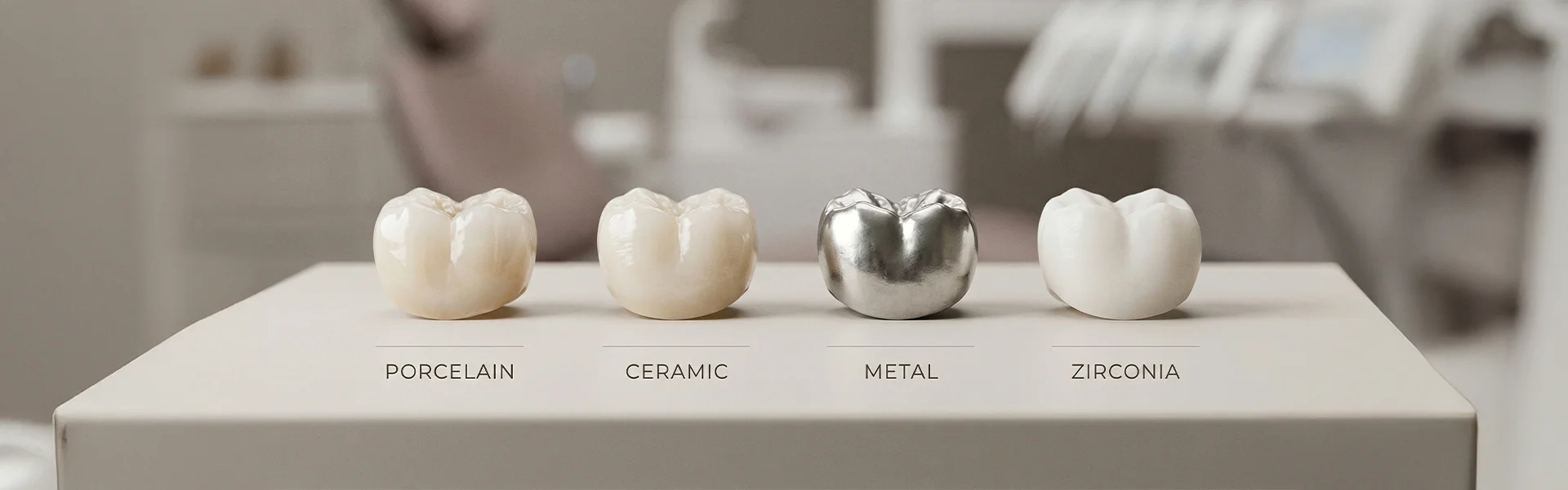
Types of Dental Crowns: Porcelain, Ceramic, Metal, and Zirconia
Introduction to Dental Crowns
Dentists recommend Dental Crowns in Clearwater when decay, fracture, or prior dental treatment has reduced a tooth’s structural strength.
Crown material selection depends on a tooth’s function and its location in the mouth.
Purpose and Function of Dental Crowns
Dentists use dental crowns to protect weakened teeth and support proper chewing and bite alignment. A dentist may recommend a crown when damage extends beyond what a filling can repair.
Dentists may also place crowns after root canal treatment or when a large portion of the tooth structure is missing.
Porcelain Dental Crowns
Dentists may recommend porcelain crowns when a natural appearance is an important treatment consideration. Dentists select porcelain crowns to blend with surrounding teeth in colour and translucency.
Dentists carefully evaluate bite forces, as porcelain may be more susceptible to wear or fracture in areas under heavy pressure.
Ceramic Dental Crowns
Ceramic crowns are similar to porcelain but may be made from different ceramic materials. Dentist near you often consider ceramic crowns for patients with metal sensitivities or when a metal-free option is preferred.
For front teeth, dentists may recommend ceramic crowns when aesthetic considerations are part of treatment planning.
Metal Dental Crowns
Metal crowns are made from alloys that may include gold or other metals. Dentists may select metal crowns because they require minimal tooth removal and tolerate heavy chewing forces.
These crowns are commonly recommended for back teeth, where durability is often prioritized over appearance.
Zirconia Dental Crowns
Zirconia metal crowns are made from a durable and strong ceramic material. Dentists often recommend zirconia crowns for back teeth and may also consider them for visible areas based on design and shading.
Dentists assess bite alignment to ensure proper fit and function when placing zirconia crowns.
Comparison of Crown Materials
Each crown material serves a different purpose based on clinical findings. Dentists compare strength, appearance, tooth location, and functional demands when recommending a crown type.
Strength and Durability of Each Crown Type
Metal and zirconia crowns are generally selected for their ability to tolerate higher chewing forces. Porcelain and ceramic crowns are chosen when appearance is a primary concern, but they may require careful placement to manage stress.
Bite patterns and tooth position influence which crown material a dentist may recommend.
Aesthetic Considerations
For front teeth, dentists often prioritize appearance and may recommend materials that closely resemble natural enamel. Porcelain and ceramic crowns are commonly used in these situations.
For back teeth, dentists often prioritize strength and durability over appearance.
Cost Differences Between Crown Types
Crown fees may differ depending on material choice, laboratory processes, and clinical requirements. Metal and zirconia options may cost more than porcelain or ceramic alternatives.
During treatment planning, dentists review cost considerations so patients can better understand their care options.
Best Crown Options for Front vs. Back Teeth
Dentists typically recommend porcelain or ceramic crowns for front teeth because of their appearance. For back teeth, metal or zirconia crowns may be preferred because they withstand higher chewing forces.
Treatment decisions are individualized based on function, aesthetics, and oral health needs.
Care and Maintenance of Dental Crowns
Dental crowns are maintained using the same oral hygiene practices as natural teeth. Routine brushing, flossing, and dental visits help maintain crown integrity and surrounding oral health.
During routine visits, dentists examine crowns for wear and assess the health of the surrounding gum tissue.
Conclusion
Selecting the appropriate dental crown depends on tooth location, functional demands, and individual oral health factors. Dentists assess these factors to recommend the most suitable crown material.
Dentists rely on clinical evaluation to guide crown selection and ongoing care, rather than material preference alone. Care may involve treatment provided by Dr. Ravi Soni at Soni Smiles.